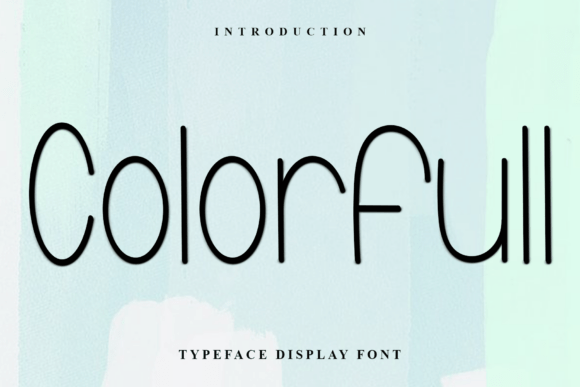
Colorfull: A Bold, Expressive Sans Serif
As a designer with years of experience in branding and visual communication, I’ve seen countless fonts come and go. But Colorfull stands out for its unique energy and expressive character. This is not a font for subtle, understated design—it’s a bold statement, perfect for projects that demand personality and visual flair.
The First Impression: Vibrant, Unapologetic, and Full of Life
From the moment you see Colorfull, it grabs your attention. The letterforms are lively, with exaggerated strokes and dynamic curves that suggest movement and emotion. It doesn’t feel static or neutral; instead, it radiates a sense of playfulness and creativity. This is a font that wants to be seen, not just read.
The mood it creates is modern and energetic, making it ideal for brands that want to stand out in a crowded market. It feels right at home in digital spaces, social media graphics, and anything that needs to catch the eye quickly. However, its vibrancy can also make it feel overwhelming if used in the wrong context.
Real-World Use: Where Colorfull Shines and Stumbles
In logo design, Colorfull works best when paired with strong, clean elements. Its boldness can dominate a logo, so it’s important to balance it with negative space or other design components. For brand identity, it adds a fresh, contemporary edge that can help differentiate a business from competitors.
Packaging design benefits from Colorfull’s visual impact, especially for products targeting younger audiences or those with a creative or lifestyle focus. On product labels, it adds a sense of fun and approachability. However, it may not be the best choice for premium packaging where a more refined aesthetic is needed.
In editorial design, Colorfull can be used as a headline font to add visual interest. But it’s less effective for body text due to its complexity and lack of legibility at smaller sizes. For web design, it’s best reserved for headers or decorative elements rather than long-form content.
Social media graphics and digital ads benefit from Colorfull’s eye-catching nature. It works well in banners, call-to-action buttons, and promotional materials. But again, its use should be strategic—too much of it can feel cluttered or unprofessional.
Where to Be Cautious: When Less Is More
While Colorfull is a strong display font, it’s not ideal for large headlines or short phrases where clarity is key. In these cases, its stylized forms can reduce readability, especially on screens or in print. For brand marks or quotes, a simpler typeface might be more effective.
When used as a decorative accent, Colorfull can add a unique touch, but it should be used sparingly. Overuse can dilute its impact and make the overall design feel chaotic. For commercial design assets, it’s important to ensure that the font is licensed correctly, especially when used in client projects or digital products.
On premium packaging or high-end marketing materials, Colorfull may not convey the level of sophistication required. In such cases, a more restrained sans serif or serif font could be a better fit. Similarly, in supporting text or small print, it’s best to avoid Colorfull altogether.
Readability, Hierarchy, and Brand Consistency
Colorfull’s strength lies in its ability to create visual hierarchy. Its bold, expressive style makes it ideal for headlines, titles, and other prominent text elements. However, this same characteristic can make it difficult to read in long paragraphs or at small sizes.
For brand consistency, it’s important to use Colorfull strategically. Pairing it with a complementary sans serif or serif font can help balance its energy while maintaining a cohesive look. In editorial design, for example, using Colorfull for headings and a simpler typeface for body text can create a clear visual structure.
Audience trust and professionalism are also affected by font choice. While Colorfull can add a modern, creative edge, it may not be the best option for industries that require a more traditional or conservative appearance. That said, in the right context—such as a tech startup, creative agency, or youth-oriented brand—it can reinforce a brand’s identity and values.
Practical Designer Notes: Test, Compare, and Think Strategically
Before finalizing any project, I always recommend testing Colorfull in black and white to see how it performs without color. This helps assess its form and contrast, which are critical for readability and visual impact.
Check small-size readability by using it in footnotes, captions, or other minor text elements. If it becomes too hard to read, consider using it only for larger, more prominent text.
Try it on real mockups to see how it interacts with other design elements. Does it work with your color palette? How does it look on different backgrounds? These questions can help determine whether it’s the right fit for your project.
Compare uppercase and lowercase versions to see how they interact. Some fonts look better in all caps, while others benefit from mixed-case usage. Review spacing and kerning to ensure that the text flows naturally and doesn’t feel cramped or stretched.
Test Colorfull beside other font styles—serif, sans serif, script, handwritten, and display fonts—to see how it pairs and how it stands out. This can help you find the right balance between uniqueness and usability.
Finally, confirm commercial licensing before using Colorfull in client or business projects. Ensure that the license covers all intended uses, including digital products, printable design, and commercial applications.
Conclusion: A Font for the Right Moment
Colorfull is not a font for every project, but when used thoughtfully, it can elevate a design in powerful ways. It’s a premium font that brings energy, personality, and a modern typography vibe to any visual work. Whether you’re designing a logo, a social media graphic, or a digital ad, Colorfull has the potential to make your work stand out.
But like any strong tool, it requires care and intention. Use it where it adds value, and avoid it where it might detract from the message. With the right approach, Colorfull can become a valuable part of your design toolkit.